
How to defrost a windshield fast: the heat, A/C and airflow settings that work, why hot water cracks glass, and how long to idle under Canadian by-laws.
Short answer: To defrost a windshield fast, start the engine, set the heat to maximum, point the airflow at the windshield, turn the A/C on and recirculation off, then scrape while the glass warms. Never pour hot water on frozen glass, and plan on only 2 to 3 minutes of idling before you drive gently.
The first hard frosts of November catch a lot of drivers off guard. You walk out late for work, the glass is white, and the temptation is to clear a small peephole and go. This guide explains how to defrost a windshield fast without cracking it, wasting fuel or breaking local idling rules, and what to keep in the car so the morning routine takes minutes instead of a quarter of an hour.
What is the fastest way to defrost a windshield?
The fastest method combines heat from inside with a scraper on the outside. Your defroster softens the bond between ice and glass while you work the surface from the top down.
• Start the engine and switch the climate control to the windshield defrost setting.
• Set the temperature to maximum and the fan high once the air starts to warm.
• Turn on the rear window defroster and heated mirrors if your car has them.
• Brush off loose snow first, then scrape the windshield, side windows, mirrors, lights and the roof.
• Wipe the inside of the glass if it fogs, then check that every window is fully clear before you leave.
Working from the outside while the car warms is what saves time. Waiting in the car for the defroster alone is the slowest option, and it uses fuel the whole time.
Should the A/C be on or off when defrosting?
Turn it on. The A/C dries the air before it reaches the glass, which clears fog faster even when the heat is at maximum.
Allstate lists four steps for cold weather: heat at its maximum setting, A/C on to pull moisture out of the air, recirculation off so drier outside air comes in, and the windows cracked for a couple of minutes if possible. AAA Club Alliance gives the same advice on recirculation, noting that switching it off pulls dry air in from outside instead of recycling the humid air trapped in the cabin. Many cars engage the compressor automatically in defrost mode, so the A/C light may already be on.
Can you pour hot water on a frozen windshield?
No. The RAC warns that pouring hot or boiling water on a windscreen can crack the glass, and that repeating it weakens the glass even when it does not crack right away.
The cause is thermal shock: the heated spot expands faster than the frozen glass around it. A small chip in the windshield makes the risk much worse. The RAC notes that lukewarm water can be used when you have no de-icer spray, but in very cold weather that water can refreeze on the glass and on the wipers. A scraper and a few minutes of defroster are the safer combination.
How long should you idle your car to defrost it?
Usually 2 to 3 minutes is enough. Natural Resources Canada says that in most cases you need no more than 2 to 3 minutes of idling from a cold start on winter days, and that parts like wheel bearings, steering, suspension, transmission and tires warm up best by driving.
The same NRCan guidance adds one condition: make sure your windows are free of ice and snow before driving. So use those minutes to scrape, not to sit and wait. Once the glass is clear, drive gently for the first few kilometres and the heater will warm up faster than it would at idle.
Are there idling limits where you live?
Many Canadian cities have them. NRCan reports that Canadian idling by-laws allow vehicles to idle anywhere from three minutes to, in one case, 10 minutes, and some local by-laws include exemptions for very cold weather. Rules vary by city and in US states and counties, so check your local by-law before you leave a car running in the driveway.
How do you keep a windshield from icing up overnight?
Prevention beats scraping. A few habits cut the morning work in half.
• Park in a garage or carport when you can, or nose the car toward the east so the morning sun hits the glass.
• Use a windshield cover or even a folded blanket held by the doors on nights with a frost warning.
• Lift the wipers off the glass on frosty nights so they do not freeze to it, and never run them over ice, which tears the blades and strains the wiper motor.
• Keep the inside of the glass clean. Film on the inside gives moisture something to cling to and makes fog worse.
• Shake snow off boots and remove wet mats so the cabin stays dry.
NHTSA also recommends filling the reservoir with winter washer fluid that contains de-icer before the season and testing your defrosters and wipers, replacing worn blades.
What should you never do when the car is warming up?
Never warm up a car in a closed garage. NHTSA warns against running your car for long periods with the windows up or in an enclosed space, and advises clearing snow from the exhaust pipe to prevent carbon monoxide poisoning.
Two other rules matter. Do not drive off with a peephole: clear the whole windshield, the side windows, the mirrors, the lights and the roof, since snow sliding off the roof can blind you at the first stop or hit the car behind you. And do not leave the car running unattended in the street, which can make it an easy target for theft. Our guide on how to prevent car theft covers that risk in more detail.
What gear makes winter mornings faster?
A good scraper, warm hands and a small kit in the trunk do most of the work. These are the items we sell for exactly this routine.
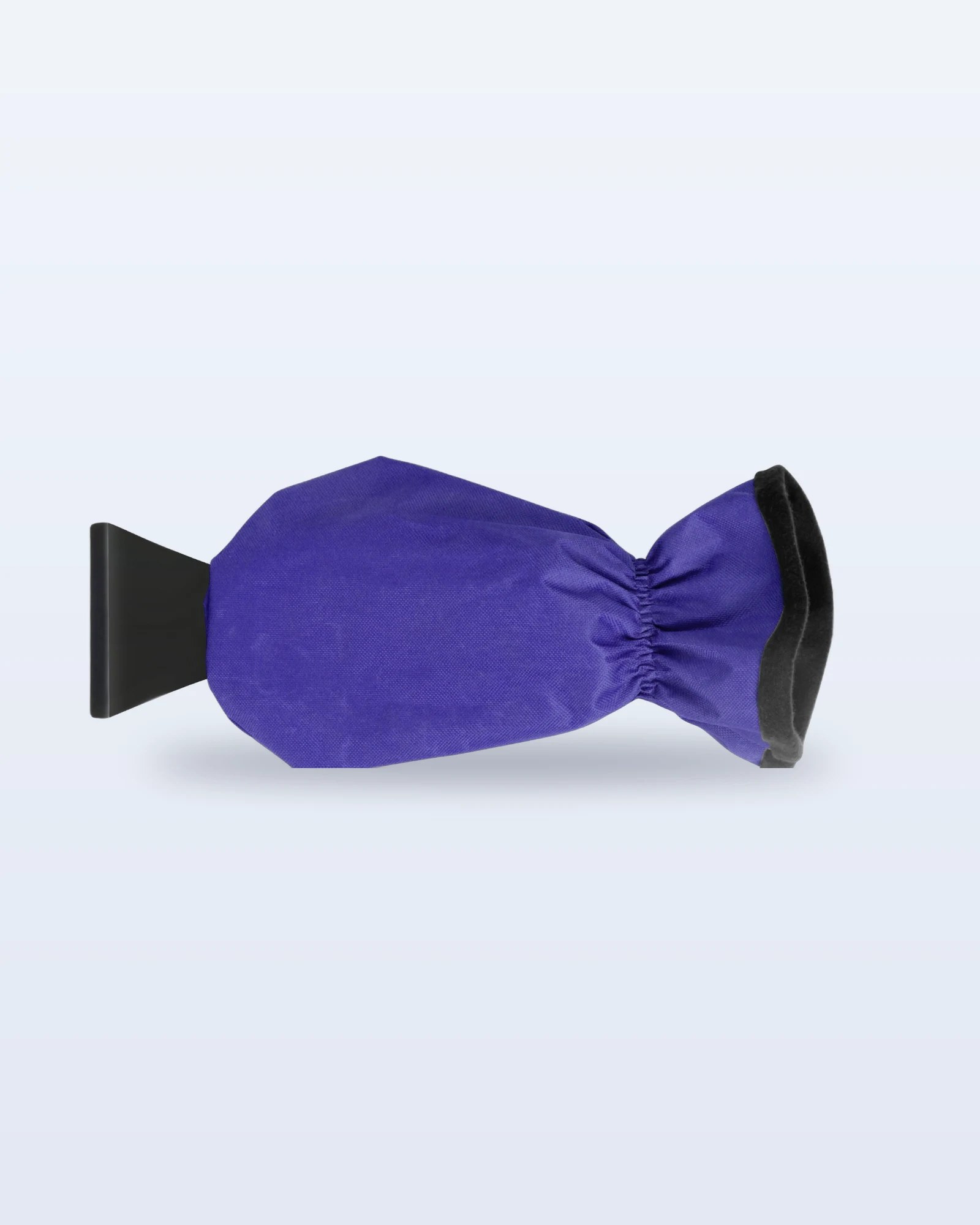
• Fleece-Lined Ice Scraper Mitt (26.99 USD): a windshield scraper built into a fleece-lined mitt with a removable blade, so your hand stays warm and dry while you clear the glass.
• Rechargeable Hand Warmer with USB Output (39.99 USD): warms your hands after scraping and can top up a phone through its USB output.
• Winter Car Emergency Kit (109.99 USD): traction chains, the fleece-lined ice scraper mitt and a rechargeable zoom flashlight, packed to stay in the trunk.
All three ship from our US warehouse, so they are currently available for delivery in the United States only. For the full list of what to carry, see our winter car emergency kit checklist, and once the glass is clear, our tips on how to drive on snow and ice will help on the road.
Frequently asked questions
Why does my windshield fog up on the inside in winter?
Warm, humid air from your breath and wet clothes condenses on cold glass. Turn the A/C on, switch recirculation off and aim the heat at the windshield to dry the air.
Is it bad to use the wipers to clear ice?
Yes. Running wipers over ice can tear the rubber blades and strain the wiper motor. Scrape the glass first and use the wipers only once the ice has melted.
Does a de-icer spray work better than scraping?
A de-icer spray loosens thick ice so it scrapes off faster, but it rarely replaces the scraper. The quickest routine is defroster on, spray if the ice is thick, then scrape.
Sources
• Natural Resources Canada: Why do Canadians idle?
• Natural Resources Canada: A Model Idling Control By-law
• NHTSA: Winter Weather Driving Tips
• AAA Club Alliance: The Best Ways to Defog Your Vehicle's Windows
• Allstate: How to Defog a Windshield in Any Weather
• RAC: How to de-ice your car