
Why the NFPA, CDC and Red Cross say flashlights and lanterns instead of candles, where to place lights in each room, and how to charge before the storm.
Short answer: use flashlights and battery-powered lanterns, not candles. The NFPA, the CDC, the American Red Cross and the CPSC all give the same advice for power outages. Keep one flashlight per person, add a lantern for the room where everyone gathers, charge anything rechargeable as soon as a storm is in the forecast, and keep spare batteries for the rest.
Why candles are a bad idea when the power is out
Candles feel like the natural thing to reach for in the dark. The numbers say otherwise. According to NFPA research for 2020 to 2024, US fire departments responded to an estimated average of 5,894 home structure fires a year that were started by candles. Those fires caused an average of 63 civilian deaths and 532 injuries a year.
The same research points to the situations that come up during a blackout:
• Over half of candle fires started when something that can burn, such as bedding, curtains, furniture or paper, was too close to the flame.
• 36% started in the bedroom.
• Sleep was a factor in 34% of candle fire deaths.
An outage puts candles in rooms where people are tired, moving around in the dark and falling asleep. That is why the NFPA candle tip sheet says to have flashlights and battery-powered lighting ready during a power outage and to never use candles. The CDC recommends battery-powered flashlights and lanterns rather than candles, gas lanterns or torches to minimize the risk of fire, and the Red Cross says simply: use flashlights, not candles.
Fuel-burning lanterns bring a second problem. The CDC lists lanterns among the sources of carbon monoxide fumes, along with stoves, grills and small engines. Keep camping lanterns that burn fuel outdoors and use battery or rechargeable lights inside.
If you have to use a candle
Sometimes a candle is all you have. The NFPA and CDC tips for that case:
• Use a sturdy holder that will not tip, on an uncluttered surface.
• Keep it at least 1 foot (30 cm) from anything that can burn.
• Stay near it. Blow it out before you leave the room or go to sleep.
• Never use a candle if someone in the home uses oxygen.
• Keep children away from lit candles and keep matches and lighters out of reach.
For a soft light that looks like a candle, the NFPA suggests flameless candles.
Flashlights and lanterns do different jobs
A flashlight is for moving: walking to the bathroom, checking on a child, finding something in a closet. A lantern is for staying put: it lights a whole table or room so people can eat, read or play a game. Ready.gov says to have flashlights for every household member, and most homes do well with one or two lanterns on top of that. A headlamp, if you have one, keeps both hands free for cooking or carrying things.
Where to put your lights
Set this up before the storm, while you can still see what you are doing.
• Each bedroom: a flashlight on the nightstand or in a drawer next to the bed, so nobody has to search in the dark.
• Main room: a lantern hung from a hook or set high on a shelf. Light from above spreads farther and is harder to knock over.
• Bathroom: a small lantern or a flashlight that stands on its end.
• Stairs and hallways: a lantern at the top or bottom of the stairs, turned to low.
• Kitchen: a light near the counter where you prepare cold food, and one by the emergency kit.
Tell everyone where the lights are, especially children and guests. A light no one can find does not help much.
Charge before the storm, not during it
Rechargeable lights are great right up to the moment they run empty. Plan to charge them while the grid is still up. Ready.gov explains that a Winter Storm Watch is usually issued 12 to 48 hours before a storm and a Winter Storm Warning usually 12 to 24 hours before. Either one is your signal to:
• Charge every rechargeable flashlight, lantern and power bank to full.
• Check spare batteries for anything that uses them. Ready.gov's winter guidance says to have extra batteries for radios and flashlights.
• Put lights in their spots so they are ready when the house goes dark.
Solar charging: a slow backup that works without the grid
A solar panel on a lantern lets you keep some light going during a long outage, even when there is no outlet anywhere. It is slow. Treat it as a way to stretch your light over several days, and start with a full battery charged by USB.
• Put the lantern where it gets direct daylight, panel facing the sky.
• Expect less charge on short, cloudy winter days.
• Keep it out of rain and snow if it is not rated for water.
• Bring it in before dark so it is ready for the evening.
Lights we carry
These ship in the US. Each one needs to be charged before you need it.
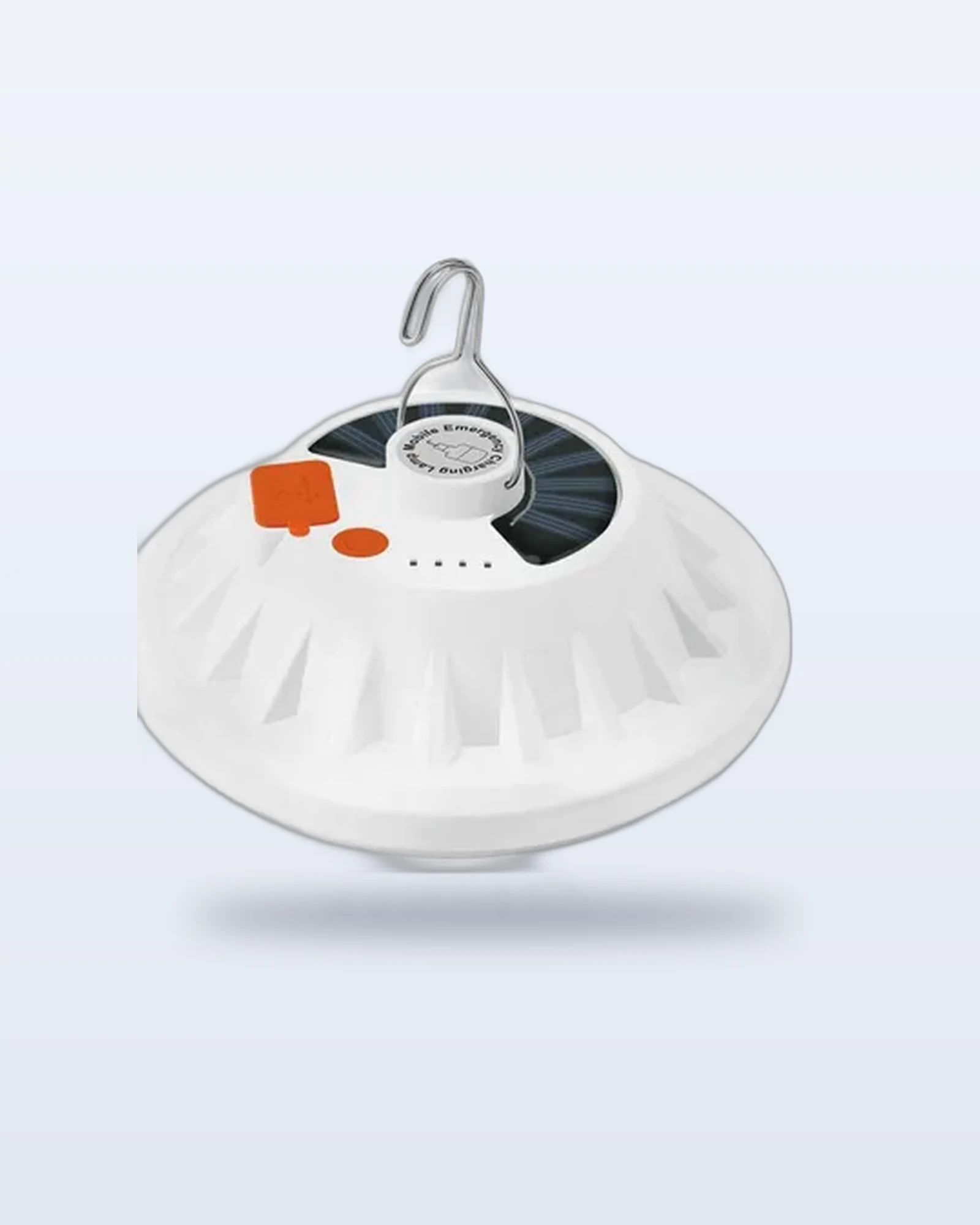
• Solar and USB Rechargeable LED Lantern ($29.99): 60 LEDs, 5 modes including SOS, a metal hook for hanging, and recharging by USB or its built-in solar panel. It also has a USB port to top up a phone in a pinch. The maker does not state the battery capacity, and the solar panel is slower than USB.
• Collapsible Solar Lantern with USB Output ($29.99): folds to about 4.7 x 3 x 2 inches, 3 modes, micro-USB or solar charging. Small enough to leave in a drawer.
• Rechargeable Zoom Flashlight with COB Side Light ($39.99): a zoom beam plus a white and red side panel, 1800 mAh battery with USB-C charging, IPX4 splash resistant. It ships within the contiguous US.
You can see everything for outages in our Emergency collection, and the full supply list is in our 72-hour power outage kit checklist.
Frequently asked questions
Are battery-powered candles safe?
The NFPA suggests flameless candles in the home, and the CPSC recommends flashlights or battery-operated candles instead of real ones.
Can I use a gas camping lantern inside?
The CDC lists lanterns among the sources of carbon monoxide and recommends battery-powered flashlights and lanterns rather than gas lanterns. Keep fuel-burning lanterns outside.
How many flashlights do I need?
Ready.gov says one for every household member. Add a lantern or two for shared rooms.
Sources
• NFPA: Candle Safety and statistics
• NFPA: Candle Safety tip sheet
• CDC: What to Do to Protect Yourself During a Power Outage
• CDC: Carbon Monoxide Poisoning Basics
• American Red Cross: Power Outage Safety
• Ready.gov: Power Outages
• Ready.gov: Winter Weather
• CPSC: Winter Storm May Knock Out Power (February 2026)