
What Ready.gov and the Red Cross say to keep for three days without power: water per person, food, light, radio, first aid, medications, documents and cash.
Short answer: plan for at least three days without power. The Ready.gov basic kit starts with one gallon of water per person per day, several days of non-perishable food, a flashlight, a battery-powered or hand-crank radio, extra batteries, a first aid kit, a phone with chargers and a backup battery, and a manual can opener. Add medications, copies of documents, cash and warm bedding. The American Red Cross suggests a 3-day supply for a kit you take if you evacuate and a 2-week supply if you stay home.
A 72-hour kit is the version most households can finish in a weekend. It covers the first days of an outage, when Ready.gov warns that stores, gas stations, ATMs and banks may close and that communications, water and transportation can be disrupted. Once it is done, you can build it up toward the two weeks the Red Cross recommends for staying home.
Start with what needs electricity
The first step on the Ready.gov power outage page is an inventory, not a shopping trip. List the things you rely on that need power, then plan batteries or other backup sources for them, such as a portable charger or power bank. Walk through the house and write down:
• The lights you use after dark, room by room
• Phones, and whether your home phone works in an outage and for how long
• Medical devices and any medicine that must stay cold
• Your heating system: does it need electricity to run?
• The fridge and freezer
That list tells you what to buy first. A home with a powered medical device or insulin in the fridge has a different top priority than a home without one.
Water: the number to remember
Ready.gov and the Red Cross use the same figure: one gallon per person per day, for drinking and sanitation. For 72 hours that works out to:
• 1 person: 3 gallons
• 2 people: 6 gallons
• 4 people: 12 gallons
Ready.gov lists extra water for pets as its own item, so add some if you have animals. Sealed store-bought jugs stack easily in a closet. Check the dates on them each time you check the rest of the kit.
Food that needs no fridge
Ready.gov asks for at least a several-day supply of non-perishable food, and the Red Cross adds that it should be easy to prepare. In a winter outage, choose things you can eat without cooking: canned beans and fish, peanut butter, crackers, cereal, dried fruit, nuts and shelf-stable milk. Pack a manual can opener, which is on the Ready.gov basic list.
For what is already in the kitchen, Ready.gov says a closed refrigerator keeps food cold for about four hours and a full freezer holds its temperature for about 48 hours. The Red Cross adds that a half-full freezer lasts about 24 hours. Eat perishables first, keep the doors shut and put a thermometer inside. After the outage, Ready.gov says to throw away food that has been at 40 degrees or higher for two hours or more, or that has an unusual odor, color or texture.
Light that works without the grid
Ready.gov says to have flashlights for every household member. The NFPA puts it plainly: have flashlights and battery-powered lighting ready to use during a power outage, and never use candles. A practical mix for a home kit:
• One flashlight per person, kept where that person sleeps
• One or two lanterns that light a whole room
• Spare batteries for anything that takes them
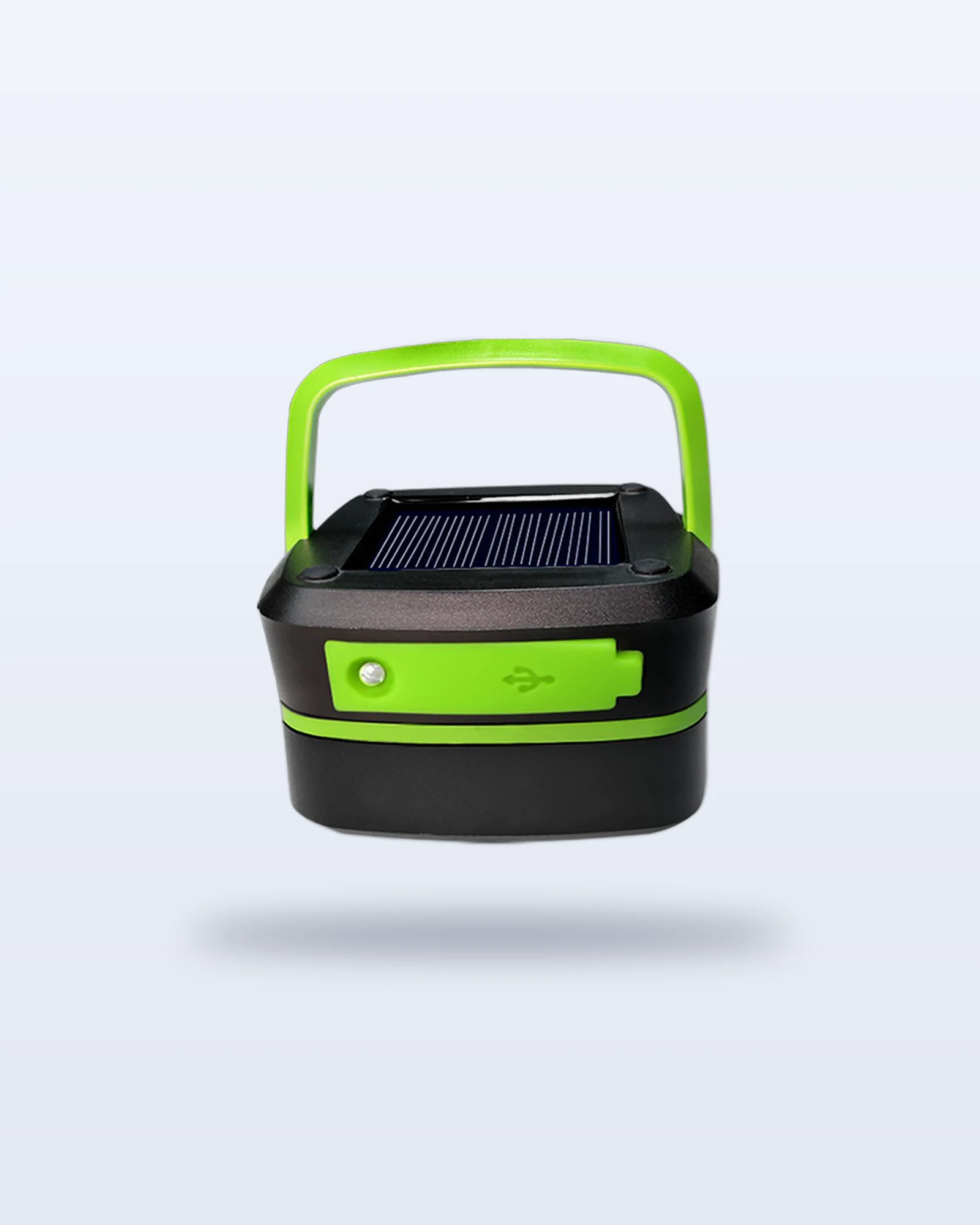
Rechargeable lights are convenient only if they are full when the storm arrives, so charge them as soon as a storm shows up in the forecast. A lantern that can also recharge from the sun gives you a slow backup once the battery runs down. Our Collapsible Solar Lantern with USB Output ($29.99, ships in the US) folds to about the size of a small box, has 3 light modes and recharges by micro-USB or from its solar panel. The panel is small and slow, so charge it by USB before you put it in the kit. For room-by-room tips, read our guide to lighting your home safely during a blackout.
A radio that does not need Wi-Fi
The Ready.gov list calls for a battery-powered or hand-crank radio and a NOAA Weather Radio with tone alert. A hand-crank model suits a power outage kit well because it needs no outlet, and you can keep it going without spare batteries. Our guide on getting alerts when cell and internet are down explains how the different alert systems work.
First aid, medications and medical needs
Both Ready.gov and the Red Cross include a first aid kit. The Red Cross suggests a 7-day supply of medications, and Ready.gov notes that prescriptions can be hard to refill during an emergency. If anyone at home uses a powered medical device or a refrigerated medicine, Ready.gov recommends talking to your medical provider about an outage plan, including how long the medicine can be stored at higher temperatures. Its advice afterward: if the power was out for more than a day, discard medication that should be refrigerated unless the label says otherwise, and contact your doctor or pharmacist for a new supply.
This is general guidance. In a medical emergency, call 911.
Documents, cash and phone power
• Documents: Ready.gov suggests keeping important family documents saved electronically or in a waterproof container. The Red Cross list includes a medication list, proof of address, insurance policies, passports and birth certificates.
• Cash: on both lists, since an outage can close ATMs and banks.
• Phone power: Ready.gov lists a cell phone with chargers and a backup battery. Keep a power bank charged and recharge it whenever you check the kit.
• Contacts on paper: the Red Cross recommends a paper copy of your contact list. A dead phone takes every saved number with it.
Warmth for a winter outage
The longer Ready.gov list includes a sleeping bag or warm blanket for each person and a complete change of weather-appropriate clothing with sturdy shoes. If the heat goes out, our guide to staying warm without power covers what is safe. Never heat your home with a gas stove or oven: Ready.gov warns that it increases the risk of carbon monoxide poisoning and fire.
The printable checklist
Water and food
• Water: 1 gallon per person per day, 3 days minimum
• Non-perishable food for at least 3 days
• Manual can opener, cups, plates and utensils
• Pet food and extra water for pets
Light and power
• A flashlight for each person
• A lantern for the main room
• Extra batteries
• A charged power bank and phone cables
Information
• Battery-powered or hand-crank radio
• NOAA Weather Radio with tone alert
• Paper list of phone numbers
• Local maps
Health
• First aid kit
• Prescription medications (the Red Cross suggests 7 days)
• Pain relievers and other non-prescription medicine, glasses, contact lens solution
• Infant formula, diapers and wipes if needed
Safety and sanitation
• Whistle and dust mask
• Moist towelettes, garbage bags and plastic ties
• Wrench or pliers to turn off utilities
• Fire extinguisher
• Smoke alarms and carbon monoxide detectors with battery backup, installed and tested
Documents and money
• Copies of IDs, insurance papers and medical information in a waterproof bag
• Cash
Warmth
• Sleeping bag or warm blanket for each person
• A change of warm clothes and sturdy shoes
Keep everything in one or two bins you can carry. If you would rather start from a set, see the emergency kits in our Emergency collection.
Frequently asked questions
Is a 72-hour kit enough?
It is a starting point. The Red Cross recommends a 2-week supply of food and water if you stay home, and a 3-day supply for a kit you take with you when you evacuate.
How much water does a family of four need for three days?
Twelve gallons, using the one gallon per person per day guideline from Ready.gov and the Red Cross. Add more for pets.
Should I keep candles in my kit?
The NFPA says never to use candles during a power outage. Flashlights and battery-powered lanterns are the safer choice.
Sources
• Ready.gov: Build a Kit
• Ready.gov: Power Outages
• Ready.gov: Winter Weather
• American Red Cross: Survival Kit Supplies
• American Red Cross: Power Outage Safety
• NFPA: Candle Safety tip sheet