
CDC, Ready.gov and NWS advice for a cold house: one room, layers, food and drink, what never to use indoors, and the signs of hypothermia and frostbite.
Short answer: gather everyone in one room you can close off, block drafts, dress in loose layers, and eat and drink to help your body make heat. Never use a gas stove, oven, grill, camp stove or generator inside to warm up. Learn the signs of hypothermia and frostbite, and if you cannot keep the house warm, go to a warming location in your community.
When a winter storm takes out the power, the furnace often stops with it. Ready.gov warns that winter storms can cut off heat, power and communication services, and that older adults, children, sick people and pets face greater risk. Here is what the CDC, Ready.gov and the National Weather Service say to do.
Pick one room and hold the heat in
Heating one room is far easier than heating a house. The CDC and NWS give the same simple steps:
• Close off rooms you do not need, and keep doors and windows shut.
• Stuff towels or rags in the cracks under doors.
• Close blinds, curtains or draperies. At night, the CDC suggests covering windows with blankets.
• Bring blankets, sleeping bags and coats into that room. The CDC lists them as a heat source to have ready in case the power goes out.
Pick the room you can close off most easily, and keep everyone, pets included, together in it.
Dress in layers and stay dry
The NWS recommends layers of loose-fitting, lightweight, warm clothing. The CDC explains why layers work:
• Inner layer: wool, silk or polypropylene hold more body heat than cotton.
• Insulation layer: wool, goose down or fleece trap warm air close to the body.
• Outer layer: something tightly woven that blocks wind.
Add a hat, and wear mittens rather than gloves; the CDC notes mittens are warmer. Wet clothing chills the body quickly, so change out of anything damp. If you start to sweat, take a layer off. Sweat can leave you colder later.
Eat, drink and skip the alcohol
Food gives your body the energy it needs to make heat. The CDC says well-balanced meals help you stay warmer and suggests warm, sweet drinks or broth. It also advises against alcohol and caffeine, which cause your body to lose heat faster. The NWS adds that cold air is very dry, so drink plenty of water.
Babies and older adults need extra attention
The CDC says infants under one year old should never sleep in a cold room, because they lose body heat more easily than adults. Its tips:
• Dress babies in warmer clothing such as footed pajamas, one-piece wearable blankets or sleep sacks.
• Remove pillows and other soft bedding, which raise the risk of smothering and SIDS.
• If you cannot keep your home warm, make temporary arrangements to stay elsewhere.
Older adults often make less body heat. The CDC recommends checking on older friends and neighbors often, and if you are over 65, checking the temperature in your home often during extreme cold.
What you must never use indoors
This is where winter outages turn deadly. Carbon monoxide is colorless and odorless, and the CDC says it can cause sudden illness and death.
• Gas stove or oven: Ready.gov says never use them to heat your home. It raises the risk of carbon monoxide poisoning, fires and burns.
• Grills and camp stoves: the CDC says never burn charcoal indoors and never use a portable gas camp stove indoors.
• Generators: outdoors only, at least 20 feet from windows, doors and attached garages, according to Ready.gov. Our guide to generator and carbon monoxide safety covers the details.
• A running car in a garage: the CDC says never run a car or truck inside a garage attached to a house, even with the door open.
Ready.gov recommends carbon monoxide detectors with battery backup on every level of your home. If one sounds, get outside to fresh air and call 911.
Fireplaces and heaters, used carefully
If you have a fireplace or wood stove, the CDC says to use it only if it is properly vented to the outside, and to burn only the fuel it is designed for. For any heater:
• Keep anything that can burn at least 3 feet away. Ready.gov, the CDC and the CPSC all use that distance.
• Plug electric space heaters directly into a wall outlet, never a power strip, as the CPSC advises.
• Never leave children alone near a heater.
• Check with your local fire department before using a kerosene heater, and use one only with proper ventilation (CDC).
Know the signs of hypothermia and frostbite
This section is general information from the CDC and Ready.gov. It does not replace medical care. Call 911 in an emergency.
Hypothermia signs in adults, according to the CDC: shivering, exhaustion or feeling very tired, confusion, fumbling hands, memory loss, slurred speech and drowsiness. In babies: bright red, cold skin and very low energy. If a person's temperature is below 95°F, the CDC says it is an emergency: get medical attention immediately. While waiting, Ready.gov says to move the person to a warm room, warm the center of the body first (chest, neck, head and groin), and keep them dry and wrapped in warm blankets, including the head and neck.
Frostbite signs, per the CDC: a white or grayish-yellow skin area, skin that feels unusually firm or waxy, and numbness. The CDC says to seek medical care. Ready.gov adds: go to a warm room, soak in warm water, use body heat to warm, and do not massage the area or use a heating pad.
The CDC also says not to ignore shivering. It is an important first sign that your body is losing heat.
When to leave
Ready.gov says to go to a community location with power if the cold is extreme and you cannot heat your home, and to check with local officials about heating locations near you. The Red Cross notes that communities often open warming centers and charging stations. Leaving early, in daylight and on safe roads, beats leaving late.
Small things that help, without the grid
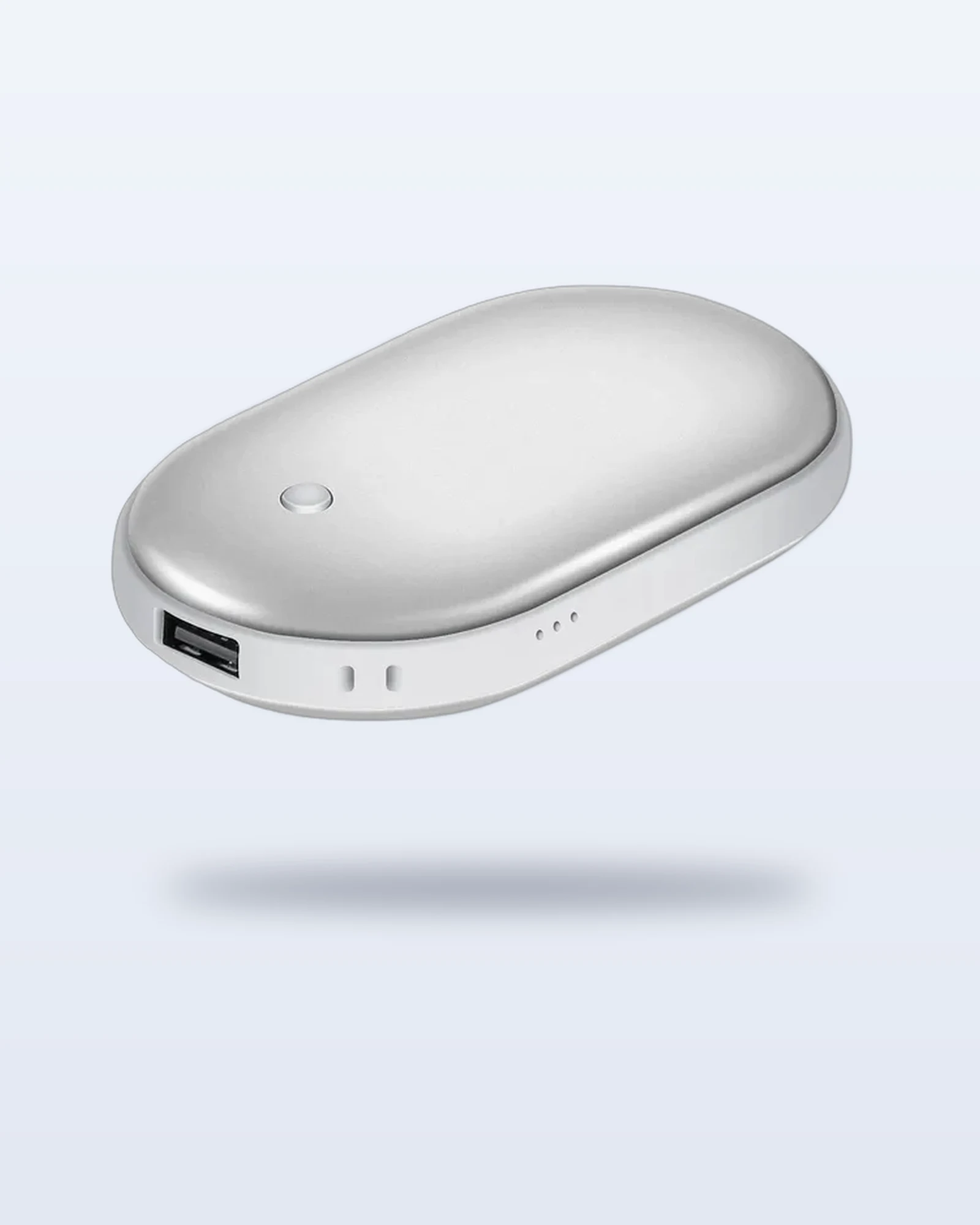
A Rechargeable Hand Warmer with USB Output ($39.99, ships in the US) gives personal warmth for your hands or pockets, with 3 heat levels (about 104, 122 and 140°F) and about 3 hours per charge, according to the maker. Its USB port can also top up a phone. It does not heat a room, and it only works if you charge it before the storm: a full recharge takes about 5 hours. Use the pouch on the high setting, do not hold it against bare skin for long, and do not give it to children or anyone who cannot feel heat well.
For light in your warm room, see our guide to lighting your home during a blackout, and for the rest of your supplies, the 72-hour power outage kit checklist. Everything for outages is in our Emergency collection.
Frequently asked questions
Can I turn on the gas oven for just a little while?
No. Ready.gov and the CDC both say never to heat your home with a gas oven or stovetop, because of the risk of carbon monoxide poisoning and fire.
Is it safe for a baby to sleep in a cold house?
The CDC says infants under one year old should never sleep in a cold room. If you cannot keep your home warm, make temporary arrangements to stay elsewhere.
How do I keep pipes from freezing during an outage?
The CDC suggests letting taps drip slightly, opening cabinet doors under sinks so warmer air reaches the pipes, and never thawing pipes with a torch.
Sources
• CDC: Safety Guidelines During and After a Winter Storm
• CDC: Carbon Monoxide Poisoning Basics
• Ready.gov: Winter Weather
• Ready.gov: #WinterReady
• Ready.gov: Power Outages
• National Weather Service: What To Do If You're Caught in a Winter Storm
• CPSC: Winter Storm May Knock Out Power (February 2026)
• American Red Cross: Power Outage Safety