
NWS, CDC, NHTSA and Ready.gov advice if you get stuck in snow: stay with the car, run the engine safely, be visible, and the winter gear worth keeping on board.
Short answer: stay with your car. Run the engine and heater for about 10 minutes each hour, with a window open slightly and the exhaust pipe cleared of snow. Make the car easy to spot: dome light on at night while the engine runs, a bright cloth on the antenna or door, and the hood raised once the snow stops. Wrap up, keep moving your arms and legs, and do not eat snow. Before winter, stock the car with a shovel, scraper, traction material, jumper cables or a jump starter, a flashlight, blankets, water, food, a first aid kit and a phone charger.
Before you go: the trip you do not take is the safest
Ready.gov advises driving in bad weather only if absolutely necessary, and following local officials if they ask you to stay off the roads. NHTSA suggests checking local weather and traffic reports and postponing non-essential travel until roads are cleared. If you do go:
• Tell someone your route and when you expect to arrive. The CDC suggests asking them to notify authorities if you are late.
• Leave with a fully charged phone, a car charger and an emergency kit in the car, as the National Weather Service recommends.
• Clear all snow and ice off the car first. The NWS notes that snow flying off cars causes accidents.
• Keep the tank as full as you can. Ready.gov says a full tank also keeps the fuel line from freezing.
If you get stuck: stay with the car
The NWS is direct about it: stay in the vehicle. If you leave, you can become disoriented quickly in wind-driven snow and cold. The CDC agrees that staying in your car is often the safest choice when storms create poor visibility or roads are covered in ice. Your car is shelter, and it is much easier for rescuers to find than a person on foot.
Heat without carbon monoxide
• Run the motor and heater for about 10 minutes each hour (NWS, CDC, Ready.gov).
• Open one window slightly while the engine runs to let in fresh air.
• Check that snow is not blocking the exhaust pipe, and clear it if it is. NHTSA adds: run the car only sporadically, just long enough to stay warm, and not for long periods with the windows up.
• Ready.gov notes that those 10 minutes are also a chance to charge your phone.
Be visible
• Turn on the dome light at night when the engine is running (NWS).
• Tie a bright cloth, preferably red, to the antenna or door.
• Once the snow stops falling, raise the hood to show you need help.
Stay warm in the cabin
The CDC's list for stranded drivers:
• Move anything you need from the trunk into the passenger area.
• Wrap your entire body, head included, in extra clothing, blankets or newspapers.
• Stay awake. You are less vulnerable to cold-related health problems.
• Keep moving your arms and legs to improve circulation.
• Huddle with other passengers for warmth.
• Do not eat snow. It lowers your body temperature.
Avoid hard work like shoveling heavy snow or pushing the car. The NWS warns that the strain of cold and hard labor may cause a heart attack, and that sweating can lead to a chill and hypothermia. If anyone shows signs of hypothermia, such as shivering, confusion, slurred speech or drowsiness, call 911. Our guide to staying warm without power lists the CDC warning signs.
What to keep in the car this winter
NHTSA groups its list by job, and Ready.gov adds a few extras. Together:
• Snow removal: snow shovel, broom and ice scraper
• Traction: sand or kitty litter in case you get stuck
• Safety: jumper cables, a flashlight, and flares, emergency markers or a reflective triangle
• Medical: a first aid kit (NHTSA includes a tourniquet) and any personal medicines
• Comfort and survival: blankets, bottled water and non-perishable food
• Communication: a cell phone and car charger. Ready.gov also suggests a power bank in case the car loses power.
• A paper map
Ready.gov says car kits should be checked every six months, with expired items replaced. For a printable version, see our winter car emergency kit checklist.
Gear that helps, and how to use it honestly
Traction chains
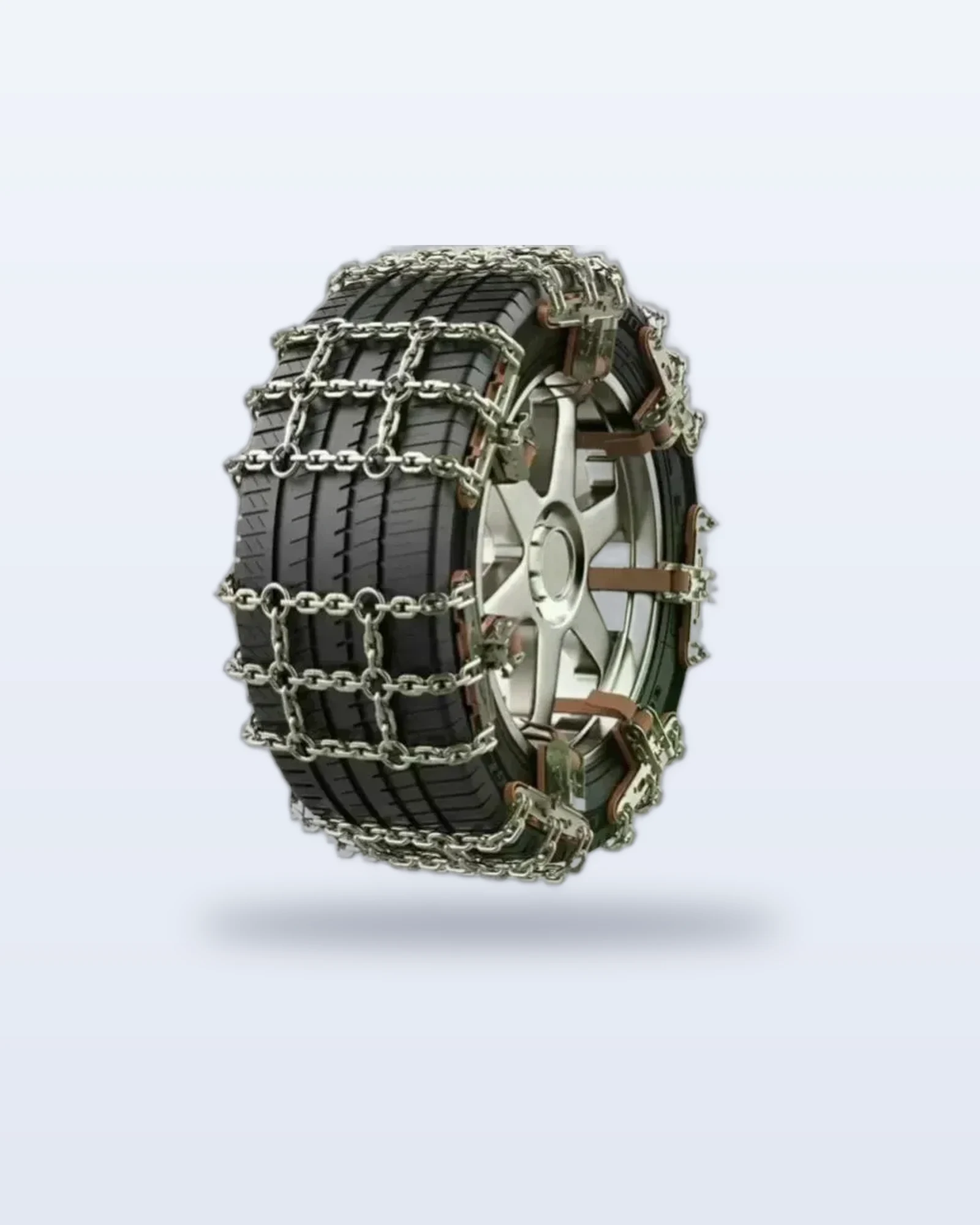
Ready.gov advises good winter tires and any chains or studs required in your area, and the CDC says to use tire chains if you must travel by car. Our Emergency Tire Traction Chains, Set of 4 ($59.99, ships in the US) strap on without a jack and fit tire widths from 165 to 265 mm. Read the width on your tire's sidewall first (the first number, as in 225/65R17). They are made to get you moving again and to a cleared road: drive slowly, take them off on dry pavement, check that your vehicle maker allows chains and that there is enough wheel-well clearance, and follow any state or local chain rules.
A scraper you can use with cold hands
Clear every window and light before you drive. The CDC warns never to pour water on a windshield to remove ice, because it can shatter the glass. The Fleece-Lined Ice Scraper Mitt ($26.99, ships in the US) puts a removable plastic blade inside a fleece-lined mitt with an elastic wrist.
A flashlight that is charged
A flashlight is on every official list. The Rechargeable Zoom Flashlight with COB Side Light ($39.99, ships within the contiguous US) has a zoom beam and a white and red side light you can use for signaling. It runs on a built-in 1800 mAh battery, so charge it by USB-C before you store it in the car and top it up when you check the kit.
A jump starter for cold mornings
NHTSA explains that battery power drops with the temperature and that engines need more battery power to start in the cold. A portable jump starter lets you start the car without a second vehicle. Our Portable Jump Starter 4000A with Power Bank ($89.99, ships in the US) also works as a power bank. Charge it before winter and check its storage temperature range in the manual. Our step-by-step guide shows how to jump start a car with a portable jump starter.
Warm hands while you wait
The Rechargeable Hand Warmer with USB Output ($39.99, ships in the US) gives about 3 hours of warmth per charge according to the maker, and can top up a phone. It only helps if you charge it at home first.
Keep a window breaker within the driver's reach for other emergencies. Everything above is in our Emergency collection, where you can also see our emergency kits.
Frequently asked questions
How long should I run the engine when stranded?
About 10 minutes each hour, according to the NWS, CDC and Ready.gov, with a window slightly open and the exhaust pipe clear of snow.
Should I walk to find help?
The NWS says to stay in the vehicle because you can quickly become disoriented in wind-driven snow. The CDC calls staying in the car often the safest choice in poor visibility or on icy roads.
Can I eat snow for water?
No. The CDC and NWS both warn that eating snow lowers your body temperature. Keep bottled water in the car.
Sources
• National Weather Service: What To Do If You're Caught in a Winter Storm
• CDC: Safety Guidelines During and After a Winter Storm
• NHTSA: Winter Weather Driving Tips
• Ready.gov: Car Safety
• Ready.gov: #WinterReady
• Ready.gov: Winter Weather