
Tires lose about 1 PSI for every 10 °F drop. Where to find the right pressure, when to check, and how to top up with a portable inflator.
Short answer: tires lose about 1 PSI for every 10 °F (about 5.6 °C) drop in temperature. Check them cold, at least once a month, and fill to the pressure on the sticker inside the driver's door, not the number on the tire sidewall.
Why your tire light comes on the first cold morning
Air contracts as it cools. A drop from 70 °F to 20 °F, about 21 °C to -7 °C, takes roughly 5 PSI out of each tire. US rules require the tire pressure warning to light up when a tire is about 25% below the recommended pressure, so by the time you see it, the tire is already well under. Low pressure means longer braking, worse handling on snow, more wear and higher fuel use.
Find the right number
The correct cold pressure for your car is on the placard inside the driver's door or in the owner's manual. The number molded on the tire is the maximum the tire can hold, not what your car needs.
When to check
• At least once a month, and after every big temperature drop.
• Cold, meaning the car has been parked for about 3 hours or driven less than a mile.
• All four tires and the spare.
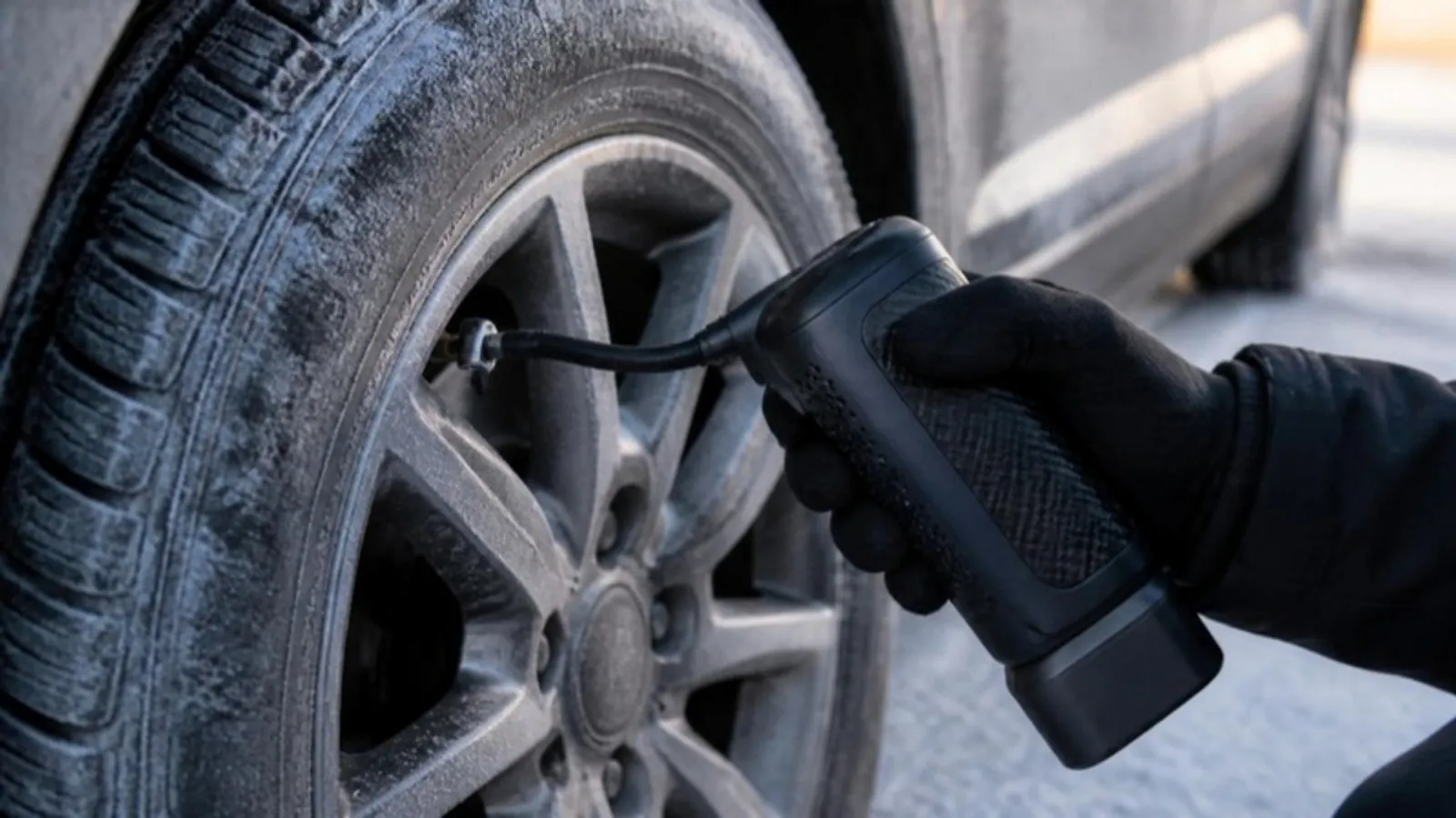
How to top up with a portable inflator
• Park somewhere safe and look for cuts, bulges or nails. Do not inflate a damaged tire.
• Remove the valve cap and connect the inflator hose.
• Set the door-placard pressure on the display.
• Start it; an auto-stop inflator shuts off at the target.
• Disconnect, check with a gauge, and put the cap back.
A cordless inflator lives in the glove box and needs no gas station. Our Smart Cordless Tire Inflator stops at the pressure you set. To watch all four tires while you drive, a plug-in tire pressure monitor shows each one on a small display.
Frequently asked questions
Should I add extra air in winter?
Fill to the door-placard pressure when the tires are cold. That already accounts for normal driving.
Why does the light go off after I drive?
Driving warms the air and raises pressure. The tire is still low when it cools; top it up.
Do nitrogen-filled tires lose pressure in the cold?
Yes, any gas contracts when it cools. Check them the same way.
Sources
• AAA: how temperature changes affect your tire pressure
• NHTSA: tires
• NHTSA: TPMS final rule
• AutoZone: how to use a portable tire inflator