
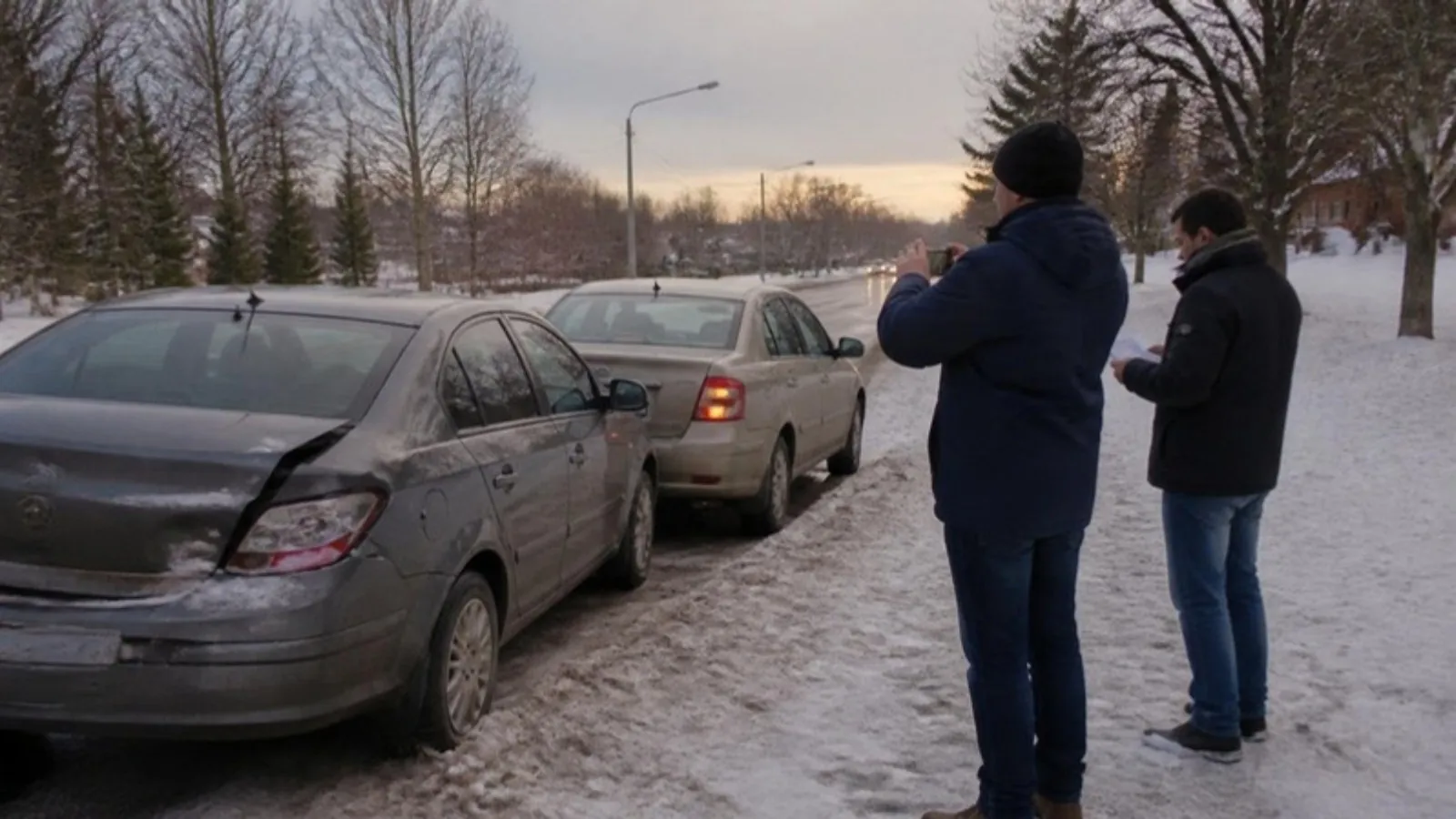
What to do after a car accident in the US or Canada: safety, when to call police, info to exchange, photos, and saving dash cam video before it is erased.
Short answer: Stop, get everyone safe and call 911 if anyone is hurt. Then check whether your state or province requires a police report, swap information without arguing about fault, take photos, and save your dash cam clip before loop recording erases it. Tell your insurer as soon as you can.
1. Stop and make the scene safe
Always stop. California's DMV warns that driving away can get you convicted of hit and run. Turn on your hazards. If anyone is hurt, call 911 and don't move an injured person unless there's immediate danger.
If nobody is hurt and the cars can move, get them off the travel lanes. California's DMV says to move your vehicle off the road in that case. On a highway in winter, the shoulder is a dangerous place to stand. Stay buckled in with hazards on, or wait well away from traffic, behind a guardrail if there is one.
2. Know when you have to report it
Reporting rules change a lot from place to place. Here are examples from official sources. Check your own state or province.
• California: report to police or the CHP if anyone is injured or killed. You must also file an SR-1 with the DMV within 10 days if anyone was hurt or property damage is over $1,000, no matter who caused it.
• Florida: police must complete a crash report for crashes with injury, apparent damage of at least $500, a hit and run, impaired driving, a tow truck or a commercial vehicle. Smaller crashes can be self-reported.
• Ontario: report right away to police if anyone is injured or the total damage looks like at least $5,000, the threshold since January 1, 2025. Some cities, like Guelph, have you file at a Collision Reporting Centre.
• Alberta: report if anyone is injured, combined damage is $5,000 or more, a driver has no licence, registration or insurance, or a vehicle can't be driven. Damage to public property like a traffic signal must be reported right away.
• Quebec: call police if anyone is hurt, even slightly. With no injuries, police aren't required, but drivers must exchange information, and you can fill out a Joint Report (constat amiable). Éducaloi notes that signing it doesn't mean you admit fault. If you hit a parked car or a road sign, contact the nearest police station.
3. Exchange information, don't argue fault
California's DMV lists what you must show: driver's license, registration, proof of insurance and your current address. Get the same from the other driver, plus their insurer and policy number. Write down names and phone numbers of witnesses before they drive off. If someone refuses to share, Alberta's guidance is to record their plate, a vehicle description and a driver description.
CAA South Central Ontario's advice is blunt: never admit fault, don't blame the other driver, and don't sign anything about fault or promise to pay.
4. Take photos and notes
Use your phone. Shoot wide photos of where the cars ended up, then close-ups of every damaged area, all plates, the other driver's documents if they agree, road signs, skid marks, and the road surface. Get snow and ice in frame too. Note the time, location, weather and which way everyone was going. If police attend, write down the officer's name and the report or file number.
5. Save your dash cam footage before it's overwritten
This is the step people forget. Dash cams record in a loop: when the card is full, they delete the oldest unsaved video. Most lock a clip when the G-sensor feels an impact, but that clip may be short, a minor bump might not trigger it, and on many cameras locked files get overwritten too once their space fills up.
• Press the camera's save or emergency button right away, if it has one.
• Once you're stopped and safe, turn off the camera or pull the card so new video can't overwrite it.
• Copy the files, don't move them. Use the WiFi app to grab the clip on your phone, or a card reader at home. Keep the originals on the card until your copies open and play.
• Save every channel: front, rear and cabin, plus a few minutes before and after.
• Keep at least two copies, like phone and computer or cloud. Don't trim, filter or re-export the originals.
• Check the camera's date and time. If the clock is off, note by how much.
• Put in a spare card so you're recording again on the drive home.
6. Share footage with your insurer and police
When you open the claim, say you have video and ask the adjuster how they want it: an upload link, email or USB key. Send copies and keep the originals. If police take the report or you go to a Collision Reporting Centre, tell the officer you have footage and ask how to submit it. Don't post it online while the claim is open, and remember video shows your mistakes too. Our guide on whether dash cams lower insurance covers how insurers treat footage.
7. Call your insurer and keep records
Alberta's guidance and CAA both say to contact your insurer as soon as possible. If your car needs a tow, CAA suggests calling your insurer before signing tow paperwork. Keep a log of everyone you talk to, plus claim numbers and receipts.
If you don't have a camera yet, our guide on how to choose a dash cam walks through the options, and are dash cams legal covers mounting and recording rules. The 2K Dual Dash Cam Front and Rear ships to the US and Canada and has WiFi for pulling clips to your phone at the scene. A spare 128 GB microSD card (US only, V30) in the glovebox lets you set the crash card aside and keep recording.
Frequently asked questions
Do I have to call police for a minor fender bender?
It depends where you are. With no injuries, Ontario and Alberta set the line at $5,000 in damage, Florida at $500, and in Quebec police aren't required when no one is hurt and the other driver is there. Check your state or province's official site.
Does my dash cam save crash footage automatically?
Most lock a clip when the G-sensor detects an impact, but not always for small bumps, and locked files can be overwritten later. Save and copy the footage yourself.
Should I give my footage to the other driver's insurer?
Talk to your own insurer first and let them handle it. Always share copies and keep the originals.
Sources
• California DMV: Fast Facts 16, Vehicle Collisions
• Florida Highway Safety and Motor Vehicles: Traffic Crash Reports
• Guelph Police Service (Ontario): Collision Reporting
• Government of Alberta: Automobile collisions and insurance
• Éducaloi (Quebec): Car Accidents: What to Do
• CAA South Central Ontario: What to do after a car accident in Ontario?