
What to do after hitting a deer: safety steps, when to call 911 or 511, how to document damage for insurance, and why fall is peak deer season.
Short answer: If you hit a deer, pull safely off the road, turn on your hazard lights and check everyone for injuries. Call 911 if someone is hurt or the deer is blocking traffic, do not touch the animal, then photograph the damage, save your dash cam clip and call your insurer.
Knowing what to do after hitting a deer matters most right now. State Farm says the months drivers are most likely to collide with a large animal in the U.S. are, in order, November, October and December. This guide walks you through the first minutes after impact, who to call in the U.S. and Canada, and how to build a clean record for your claim.
What should you do right after hitting a deer?
Get your vehicle safely off the road, switch on your hazard lights and check yourself and your passengers. Everything else can wait until you are out of traffic.
• Steer to the shoulder or a parking lot if the car is still drivable. The Wisconsin Department of Transportation advises getting your vehicle safely off the road as soon as possible after a deer strike.
• Stay buckled for a moment and look around before you open the door. Passing drivers may be looking at the animal, not at you.
• Check for leaking fluid, broken lights, a damaged hood latch or a cracked windshield before you decide to keep driving.
Should you call 911 after hitting a deer?
Yes, if anyone is hurt or the deer is still on the road. The Wisconsin Department of Transportation says to call 911 when someone is injured or the deer is in the active portion of the road.
Rules on reporting vary by state and province, so check with your local police non-emergency line if nobody is hurt. In Ontario, the official MTO Driver's Handbook says that if you hit a deer or moose, you should report it to the local police service or the Ministry of Natural Resources. In Quebec, the provincial government asks drivers to dial 511 on their cell phone to report a dangerous or unusual situation involving large wildlife.
Is it safe to approach a deer after a collision?
No. Leave the animal alone, even if it looks dead. The Ontario MTO Driver's Handbook says not to try to move an injured animal.
A hurt deer can kick hard and get up without warning. Keep your distance, keep children and pets in the car, and let police or wildlife officers handle it. If the carcass is a hazard for other drivers, that is exactly the situation where a call to 911 or 511 is the right move.
How do you document a deer collision for insurance?
Take photos of the scene and the damage while you are safe, then save your dash cam footage before it gets recorded over. A clear, time-stamped record makes the conversation with your insurer much easier.
• Photograph the front of the car, the lights, the windshield and any hair or marks on the bumper.
• Take a wide photo of the road, signs and mile markers so the location is obvious later.
• Write down the time, the direction you were driving and the name of any officer who came to the scene.
• Lock or download the clip from your dash cam. Most cameras use loop recording, so an unsaved clip can disappear on the next drive.
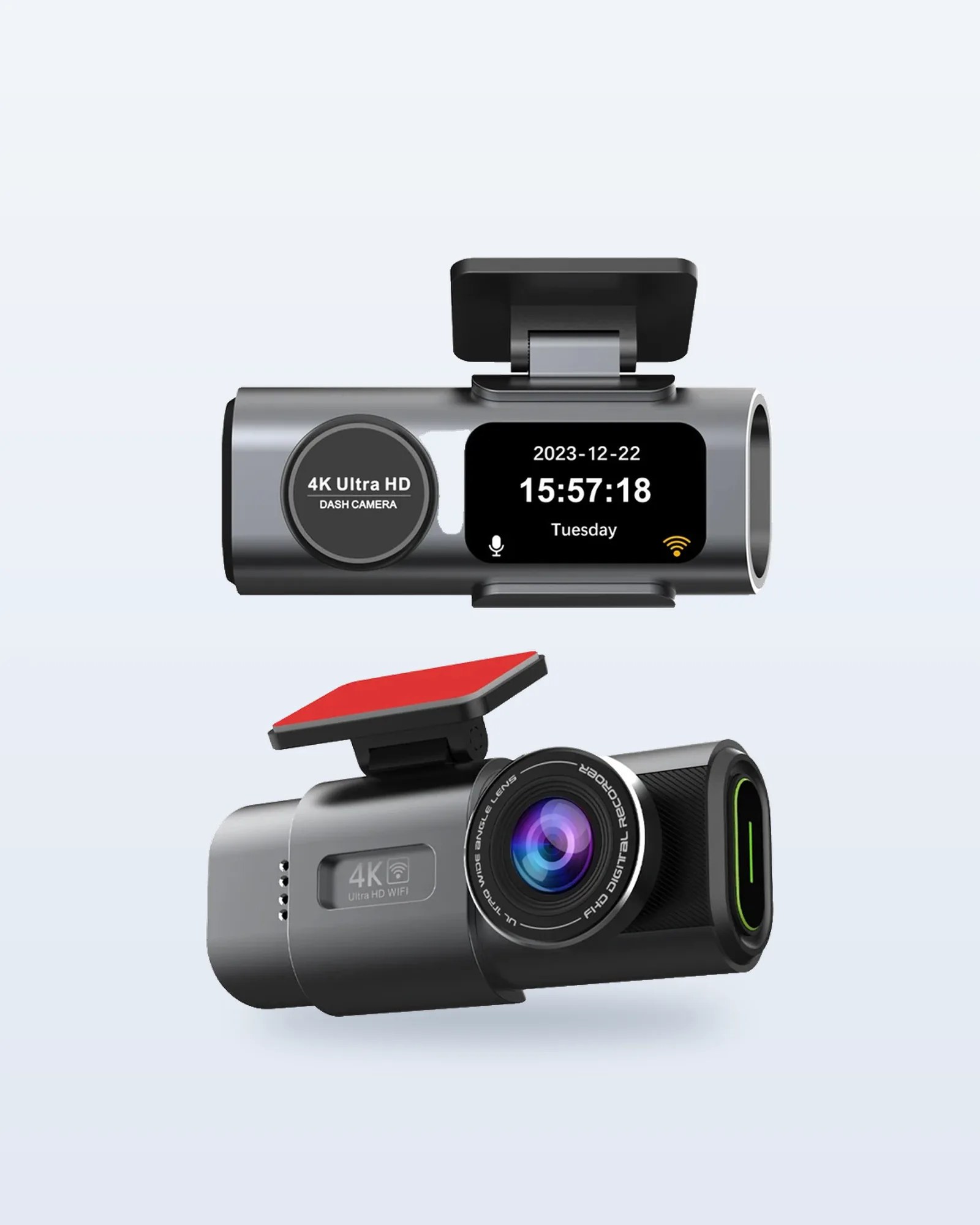
A front and rear camera with GPS keeps the where and when alongside the video. The Compact 4K Front and Rear Dash Cam with WiFi and GPS starts at $74.99 USD ($99.99 CAD) and ships with tracking to the United States and Canada. If you also want a rear camera with a WiFi app, the 2K Front and Rear Dash Cam with WiFi starts at $89.99 USD ($119.99 CAD) and also ships to both countries. For more on how footage helps with insurers, read our guide on whether dash cams lower car insurance.
When you call your insurer, ask which part of your policy covers an animal collision and what your deductible will be. Coverage depends on your policy and your state or province, so get the answer from your insurer rather than guessing.
Can you keep driving after hitting a deer?
Only if the car is clearly safe: headlights work, no warning lights are on, nothing is leaking and the hood is closed tight. If you are not sure, call for a tow.
Even a low-speed hit can crack a radiator or bend a headlight bracket. If you drive home, go slowly, watch the temperature gauge and book an inspection soon. Our checklist on what to do after a car accident covers the general steps, from exchanging information to filing a claim.
When are deer collisions most likely?
Fall is the peak. State Farm ranks November, October and December as the three months with the most large animal collisions in the U.S.
• State Farm estimates drivers had an average 1 in 145 chance of an animal collision, with over 1.6 million animal collision insurance claims in the U.S. between July 1, 2025 and June 30, 2026.
• The highest odds were in West Virginia (1 in 46), Montana (1 in 54) and Wisconsin (1 in 62), according to State Farm.
• The Wisconsin Department of Transportation counted 17,793 crashes involving deer in 2025, with six deaths and 720 injuries. In that state, 42% of deer crashes happened from October through December.
• In Quebec, the provincial government reports an average of more than 7,200 road accidents with large wildlife per year between 2021 and 2024, about 90% of them with white-tailed deer.
Darker commutes add to the risk. The Ontario MTO Driver's Handbook warns that wild animals are most active from dusk to dawn, and the clocks change soon. See our tips for driving after the clocks change.
How can you avoid hitting a deer?
Slow down at dusk and dawn, scan both sides of the road and use your high beams when it is safe. If a hit is unavoidable, brake firmly and stay in your lane.
• The Wisconsin Department of Transportation says to brake firmly and stay in your lane, because sudden swerving can make you lose control and cause a more serious crash.
• The Quebec government advises braking progressively, tapping your brakes several times to warn drivers behind you, and using your horn, which may scare the animal off.
• The Ontario MTO Driver's Handbook recommends watching for shining eyes at the roadside and being alert for other animals traveling with the one you saw.
Keeping your speed honest helps too. The GPS Head-Up Speed Display ($39.99 USD, $54.99 CAD, ships to the U.S. and Canada) shows your speed low on the windshield so your eyes stay on the road edges.
Frequently asked questions
Do you have to report hitting a deer?
It depends on where you live. Call 911 if someone is hurt or the deer blocks the road. In Ontario, the MTO Driver's Handbook says to report a deer or moose strike to local police or the Ministry of Natural Resources.
What month do most deer collisions happen?
November. State Farm ranks November, October and December as the riskiest months for large animal collisions in the U.S.
Should you swerve to avoid a deer?
No. The Wisconsin Department of Transportation and the Quebec government both advise against sudden swerving. Brake firmly and stay in your lane.
Sources
• State Farm, Where are animal (deer) collisions most likely?
• Wisconsin Department of Transportation, Drivers cautioned to watch for deer on Wisconsin roads
• Ontario, Official MTO Driver's Handbook, Dealing with particular situations
• Gouvernement du Québec, Circuler en présence de la grande faune