
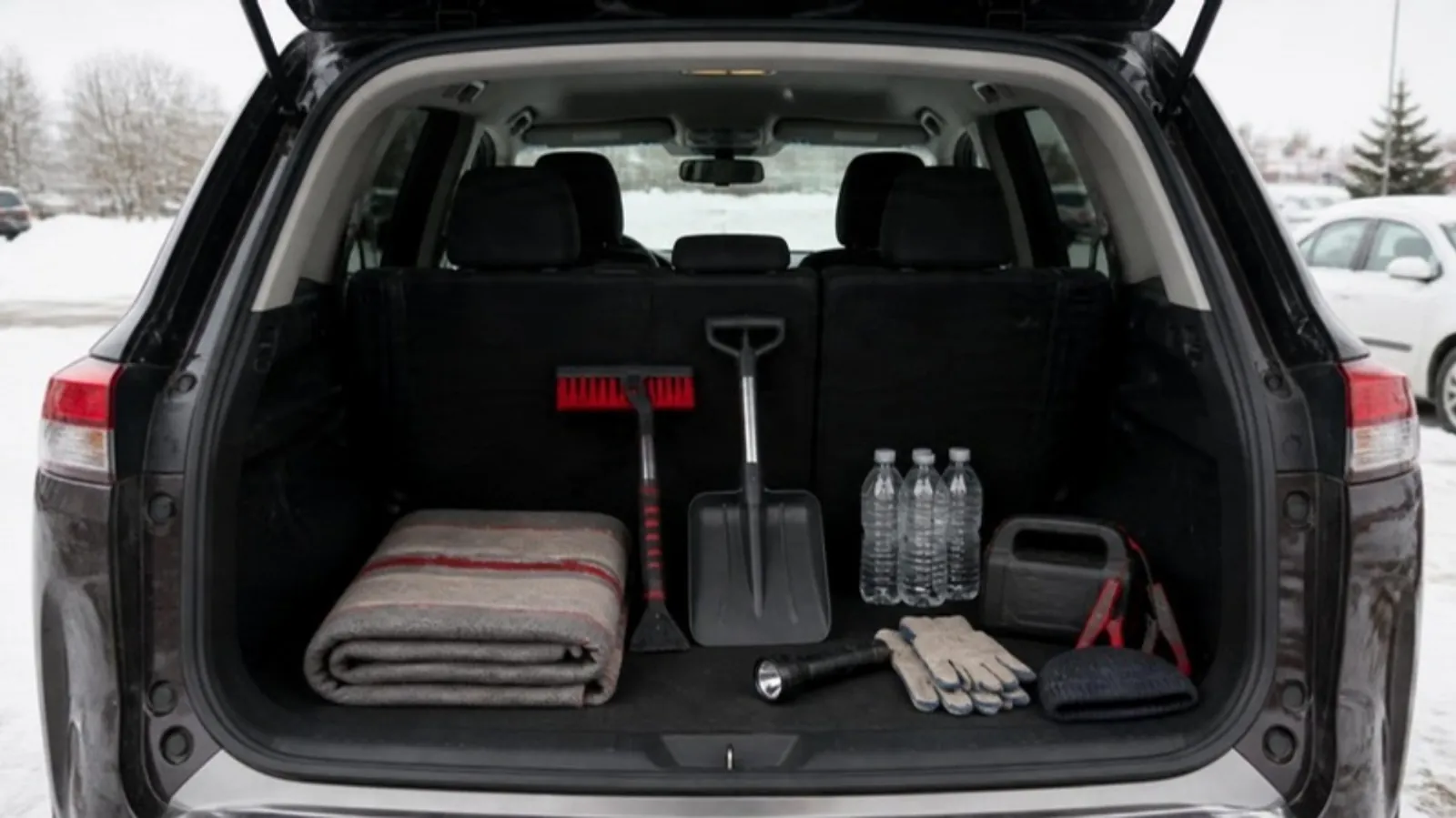
What Transport Canada, NHTSA, AAA and CAA recommend keeping in your car this winter, plus the winter tire dates for Québec and British Columbia.
Short answer: keep a shovel, traction aid, snow brush and scraper, warning lights or triangles, booster cables or a jump starter, a flashlight, a first-aid kit, a window breaker and seat-belt cutter, blankets, warm clothes, food, water and a phone charger. That list matches what Transport Canada, NHTSA, AAA and CAA recommend.
The checklist
Get unstuck
• Small shovel
• Sand, kitty litter or traction mats
• Snow brush and ice scraper
Get started
• Booster cables or a portable jump starter
• A tire inflator, such as our jump starter with air compressor, which does both
Be seen
• Warning light, reflective triangles or flares
• Flashlight with spare batteries
Stay warm and safe
• Blankets, plus a hat, gloves and coat for every passenger
• Hand and foot warmers
• Water and non-perishable food, and any needed medication
• First-aid kit
• A window breaker and seat-belt cutter, within reach of the driver
• A charged phone and a car charger
If you get stuck
Stay with your car; it is shelter and easier to find. Turn on hazard lights. Run the engine about 10 minutes an hour for heat, with a window cracked, and keep the exhaust pipe clear of snow to avoid carbon monoxide.
Winter tire rules in Canada
• Québec: from December 1 to March 15, vehicles registered in Québec must have four winter tires with the mountain and snowflake symbol or studs. The fine is $200 to $300 plus costs.
• British Columbia: on signed routes, winter tires are required from October 1 to April 30 on most routes, March 31 on some. A legal winter tire has the M+S or mountain and snowflake marking and at least 3.5 mm of tread. Chains on summer tires do not count.
Before the first storm
Test your battery, check tire pressure, top up washer fluid rated for winter, and charge your jump starter. Cold lowers tire pressure, so a tire pressure monitor helps you catch it early.
Frequently asked questions
Do I need a winter kit if I only drive in the city?
Yes. City storms strand drivers too, and a dead battery or a slide into a snowbank happens anywhere.
Can I leave a lithium jump starter in the car all winter?
Check its storage range. Many are rated to about -20 °C; below that, keep it indoors.
Are winter tires required in Ontario?
No. They are recommended, and many insurers give a discount for them.
Sources
• Transport Canada: winter driving emergency kit
• NHTSA: winter driving tips
• CAA: winter car care
• Québec: requirements for winter tires
• BC: winter tire and chain-up routes